

Every pneumatic endpoint on an offset press line — feeder suction nozzles, sheet brakes, air cushion and pneumatic actuators — traces back to a single origin: the screw air compressor. In the used-equipment trade, buyers concentrate on the press itself while the compressor is waved off with a quick blast of air; yet the state of compressor maintenance largely determines how often the plant will stop over the next few years. Using the maintenance documentation of a KAESER Aircenter SM 12/11.5 bar screw compressor with the SIGMA CONTROL BASIC controller (document no. 9_6939 02CN, March 2011 edition) as the technical baseline, this article turns compressor upkeep into a checklist that can be verified item by item, plus a reading guide for used-machine inspection.
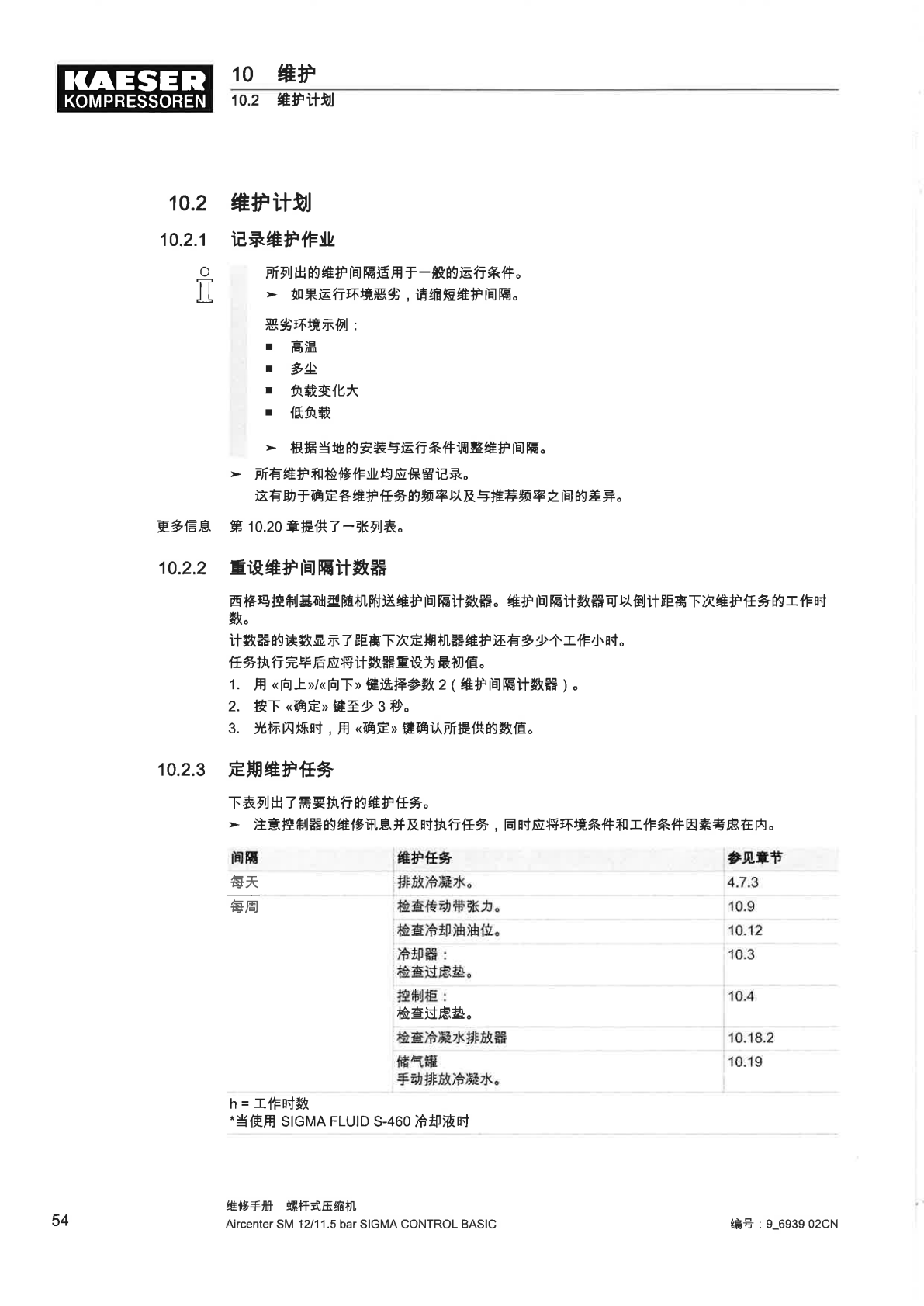
- Daily: drain condensate; the air receiver drain plug must also be operated manually.
- Weekly: check V-belt tension, cooling oil level, cooler and control-cabinet filter pads, and the condensate drain unit.
- Replace the air-filter element after no more than 3,000 operating hours; the element must never be washed and reused.
- Oil separator cartridge and oil filter: no more than 3,000 hours and at least once a year; with SIGMA FLUID S-460 coolant confirmed by oil analysis this may extend to 6,000 hours — both cartridges must be changed together with the oil.
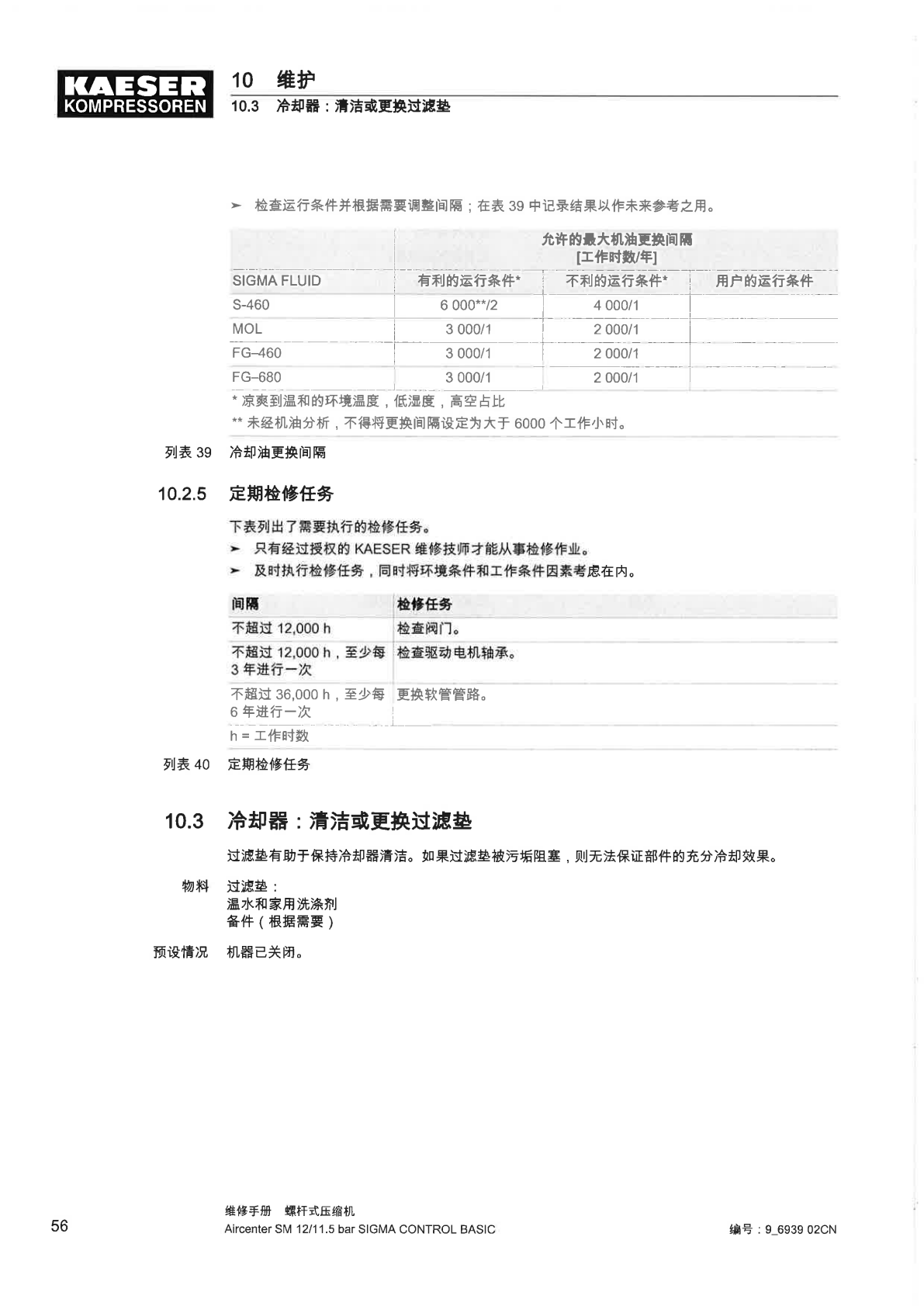
- Cooling-oil change intervals depend on conditions: 6,000 hours/2 years under favorable conditions, 4,000 hours/1 year under unfavorable ones; high temperature, dust and fluctuating loads shorten them further.
- Yearly: tighten all electrical connections, test the pressure relief valves and the overheat shutdown, check the cooler for leaks.
Condensate: the invisible daily work order
Water separation in compressed air is physics, not a fault. The risk lies in where the water goes.
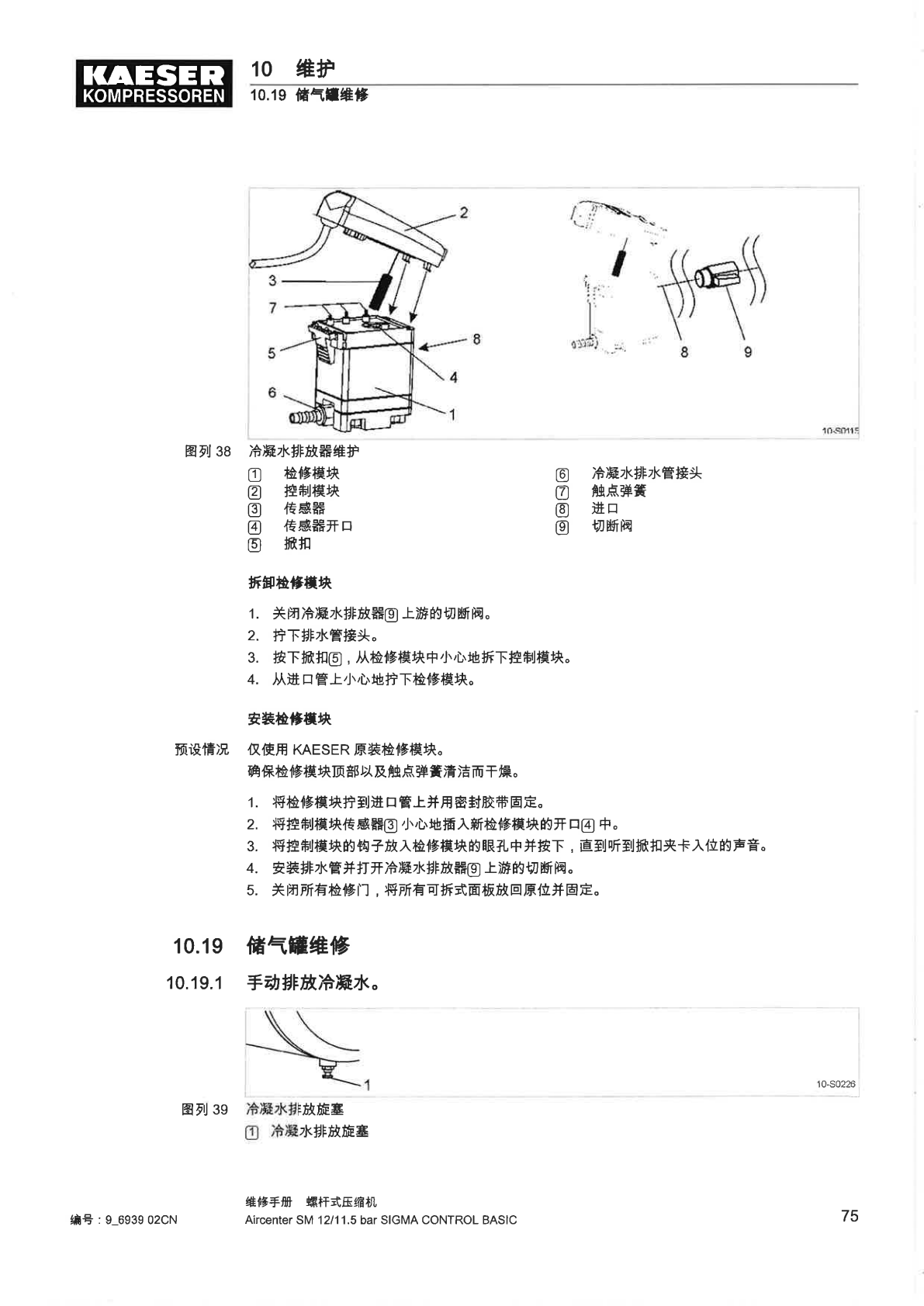
The condensate drain unit — a sensor, control module and float-point spring assembly — drains automatically, while the air receiver has its own plug that must be opened manually every week. When servicing the drain unit, keep the contact spring clean and dry, refit the module until the latch clicks and restore the lines. A blocked drain lets water travel into the oil circuit and emulsify the coolant; the fault table lists a blocked oil return line as one cause of excessive oil consumption, and emulsified oil in turn degrades bearing lubrication. A simple field check: open the receiver drain plug; if visible water comes out, the automatic drain has already failed — fix it before anything else.
Cooling oil: change it by condition, not by calendar
The oil-change interval table deserves to be copied verbatim into the maintenance log: SIGMA FLUID S-460 lasts up to 6,000 operating hours or 2 years under favorable conditions (cool, moderate environment, low humidity, high duty ratio), and 4,000 hours or 1 year under unfavorable ones. MOL oil is limited to 3,000 hours/1 year in both columns; FG-460 to 3,000 and 2,000 hours respectively. The documentation draws a hard line: without an oil analysis, never set the change interval above 6,000 operating hours. Two pairings are mandatory — changing the oil always means changing the oil filter and the oil separator cartridge at the same time; the drain path involves the separator tank and the temperature control valve (optional W1). Hot components and oil pose a burn hazard: wear long sleeves and gloves. If the machine has been idle for a long stretch or is still running, an external compressed-air pump is needed to push the residual oil out.
Filter elements and pads: two different scrapping rules
The air-filter element is a one-shot part. The documentation is blunt: it must not be cleaned, and a non-matching element lets dust enter the pressure system and destroy the compressor — replace it after 3,000 hours at the latest. Cooler and control-cabinet filter pads are the opposite: wash them with warm water and household detergent, vacuum the dust off the frame with an industrial vacuum cleaner, and never use pointed objects, since a damaged pad defeats the cooling. The controller menu provides supporting evidence: comparable Eletronik systems show the air-filter differential pressure (sample reading about 0.02 bar) and the oil-separator differential pressure (about 0.1 bar) on the measured-data page; a steadily rising delta-p means the element is nearing the end of its life. The same page shows total running hours, loaded hours and motor-start count — ready-made data for judging the load profile.
Yearly and long-cycle inspection items
The annual list concentrates on the safety chain: check that all electrical connections are tight; test the compressor and receiver relief valves — close the user shut-off valve between machine and air system, run the compressor to pressurize the receiver, then pull the ring on top of the relief valve to open it; if the valve does not open, stop the machine until it is replaced. Verify the overheat safety shutdown and check the cooler for leaks at the same time. Three long-cycle limits apply: inspect the valves after no more than 12,000 operating hours; inspect the drive motor bearings at least every 3 years; replace the hose lines after no more than 36,000 hours or 6 years. Before any service work, switch off and lock the isolating device, confirm zero voltage on the floating relay contacts, and use a hand-held pressure gauge to verify 0 bar on every hose connection — the documentation explicitly forbids opening or dismantling any valve to release pressure.
| Interval | Core task |
|---|---|
| Daily | Drain condensate |
| Weekly | V-belt tension, oil level, cooler and cabinet filter pads, condensate drain, manual receiver drain |
| ≤1,000 h | Service V-belts, check air filter, clean cooler and pads, clean dryer condenser |
| ≤3,000 h | Replace air-filter element |
| ≤3,000 h (up to 6,000 h for S-460 with oil analysis) and at least yearly | Replace oil separator cartridge and oil filter |
| Yearly | Tighten electrical connections, relief-valve test, overheat shutdown check, cooler leak check |
| Long cycle | Valves ≤12,000 h; drive motor bearings ≥3 years; hoses ≤36,000 h or 6 years |
Reading maintenance history during a used-machine inspection
Inverted, the table above becomes the inspection checklist. First read the controller counters: the ratio of total running hours to loaded hours and motor starts reveals the load profile; an abnormally high start count suggests the minimum stop time was set to zero and the machine cycled constantly. Second, check whether the service timer was simply reset without the work being done, and scan the latest shutdown records for over-temperature entries. Third, inspect consumables: hoses and seals approaching the 6-year line, sealant traces from repeated drain-unit repairs, and an oil-separator delta-p clearly above the normal band. For a full-line acceptance, put the compressor on the same checklist as the press and tick each item on site.
Pneumatic compatibility is worth a side note when buying a used press: the feeder air-circuit cleaning and belt replacement routine assumes a stable air supply in the first place. If you are still comparing offers, filter the current equipment listings by brand and format first, then bring this interval table along to negotiate a fair allowance for the compressor.
Conclusion: screw compressor maintenance leaves no room for doing it by feel — drain daily, check oil level and pads weekly, replace the air-filter element at 3,000 hours, set the oil-change interval by oil type and environment, test the relief valves yearly. That interval table is itself the acceptance sheet. A used-press buyer who carries it onto the shop floor needs half an hour to tell whether the seller truly maintained this air supply — and whether it will run quietly for the next three years or keep stopping the line.