

Mainstream sheet-fed offset presses built from the 1990s through the mid-2000s — Roland 700 series, KBA Rapida 105U, Heidelberg SM74 — share one defining trait: the main drive is almost universally a DC motor paired with a DC converter, with speed feedback provided by a tachogenerator or an incremental encoder. The architecture is mature and spare parts are still findable, but inspecting one demands a completely different checklist from AC-servo machines. When buying a used DC-drive press, the question is not whether the motor spins; it is whether the lubrication record, the commutator condition and the converter parameters all hold up. This article breaks those criteria down item by item.
- Frame size dictates lubrication design: DC main motors of frame 200 and below are permanently lubricated; frames 225 to 250 carry a grease-regulated relubrication unit on the drive side; frame 260 and above require relubrication on both bearings. Start every inspection by reading the frame size off the nameplate.
- Grease intervals change sharply with speed: the same frame-225 motor needs relubrication every 7,500 running hours at 1,000 rpm but every 1,500 hours at 3,000 rpm. A motor with no relubrication history should be valued as if its bearings are past service life.
- The commutator is the motor’s medical chart: clean it with a dry, lint-free cloth at least every 600 running hours, and never allow the light-brown patina to be machined away.
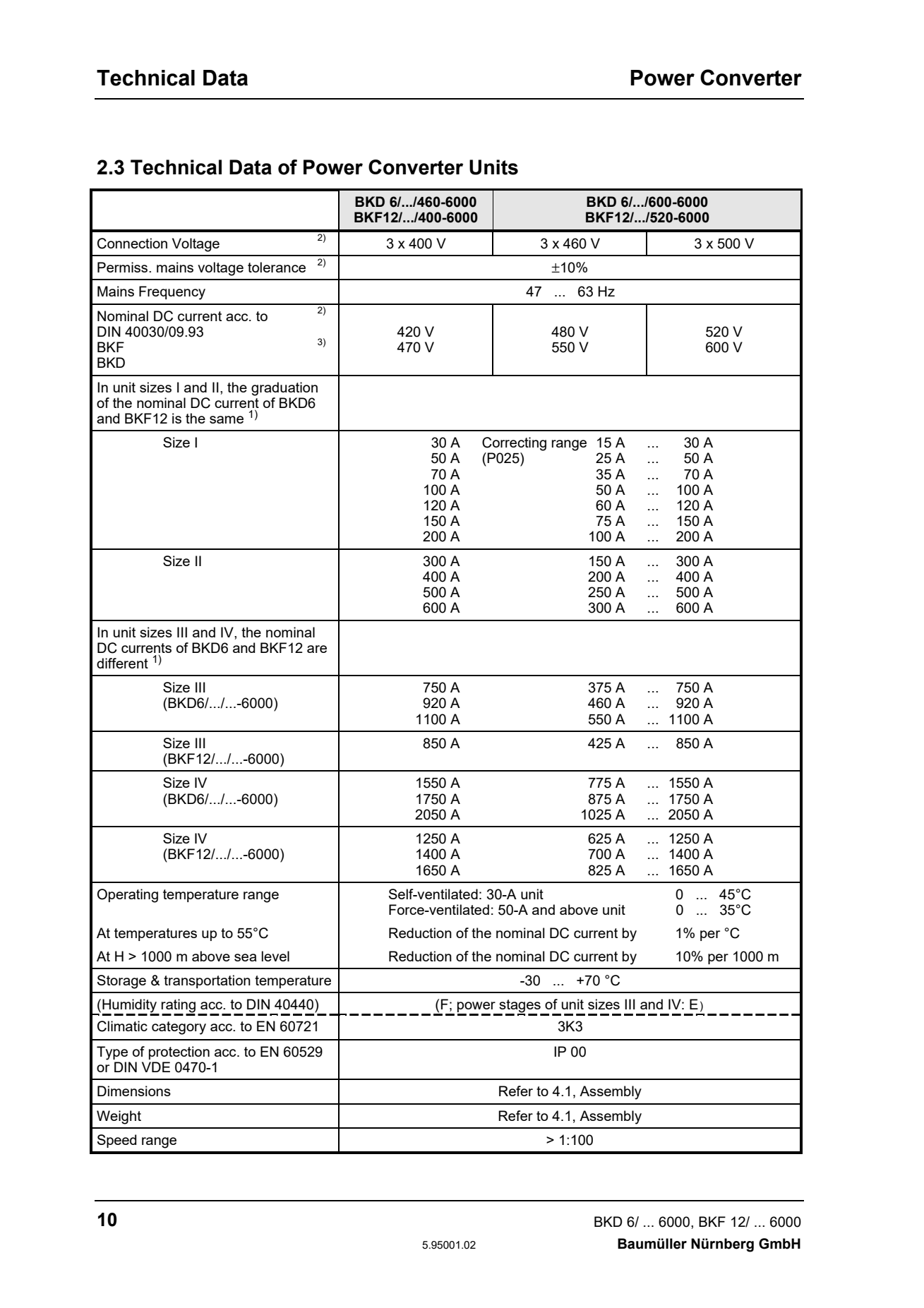
- Check three converter nameplate values first: mains voltage tolerance (±10 percent), frequency range (47 to 63 Hz) and speed range (better than 1:100).
- Encoders have hard installation limits: shaft concentricity max 0.1 mm, immersion depth 20 mm, housing runout max 0.3 mm — exceeding them causes speed-loop oscillation and register drift.
1. Read the frame size before judging bearing life
Ventilated DC motors use rolling bearings whose maintenance logic differs dramatically by frame size. Frames up to 200 leave the factory permanently lubricated — no user greasing is possible. Frames 225 to 250 add a drive-side relubrication unit with grease-quantity regulation, and frame 260 and above must be greased on both the A and B sides. Copy the frame number first, then hold the seller to the corresponding standard: a frame-260 motor that has supposedly never been greased means either lost records or long-term neglect, and bearing life must be discounted accordingly.
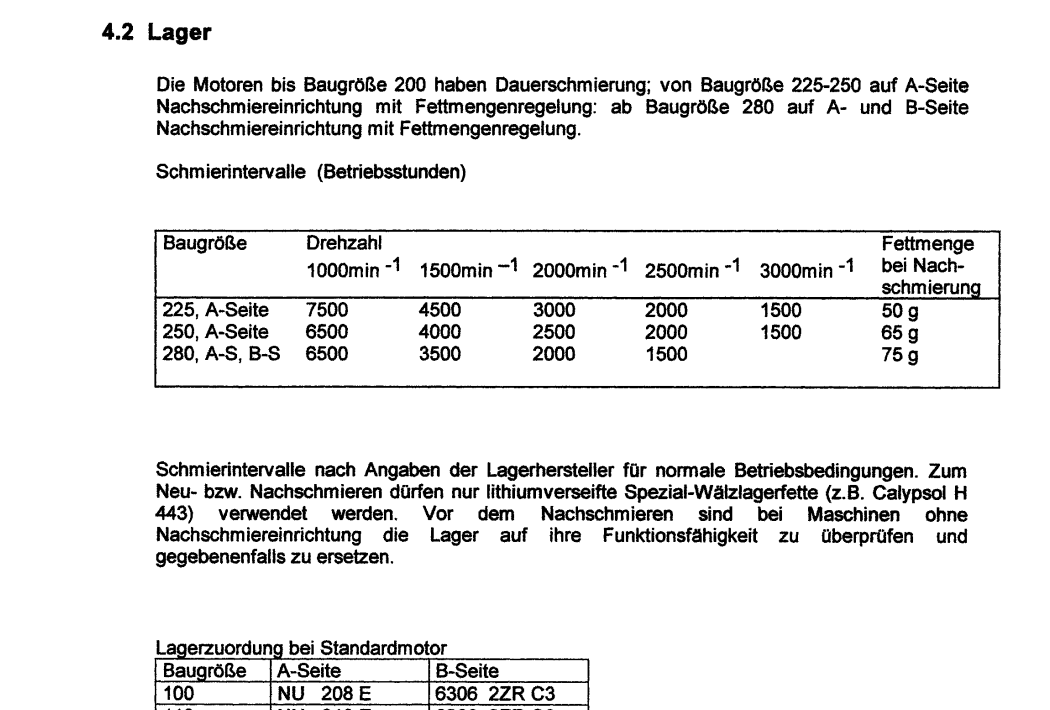
Relubrication intervals depend on both frame size and actual running speed. The reference values for standard motors:
| Frame | 1,000 rpm | 1,500 rpm | 2,000 rpm | 2,500 rpm | 3,000 rpm | Grease per bearing |
|---|---|---|---|---|---|---|
| 225 (drive side) | 7,500 h | 4,500 h | 3,000 h | 2,000 h | 1,500 h | 50 g |
| 250 (drive side) | 6,500 h | 4,000 h | 2,500 h | 2,000 h | 1,500 h | 65 g |
| 280 (both sides) | 6,500 h | 3,500 h | 2,000 h | 1,500 h | 1,500 h | 75 g |
Only lithium-soap special rolling-bearing grease may be used, and each shot must match the frame-specific gram rating — less is safer than more. Over-greased bearings run hotter than dry ones, and only an evenly warm bearing housing gives a trustworthy temperature reading. Standard bearing assignments also follow a pattern: frame 100 uses an NU 208 E cylindrical roller bearing on the drive side and a 6306 2ZR C3 deep-groove ball bearing opposite, while frame 280 pairs an NU 2220 E with a 6316. Ordering bearings by designation beats ordering by motor model.
2. Commutator and brushes: reading a DC motor on the spot
Clean the commutator surface at least every 600 running hours with a dry lint-free cloth to remove carbon dust and oil film. One rule above all: a uniform light-brown oxide film is the product of good carbon-brush seating and is what makes commutation smooth — grinding or turning it off destroys the motor. What actually warrants alarm are striped burn marks, radial scorch spots, rough steps and irregular grooves; such damage can only be repaired by turning the commutator in a lathe, which means a price cut or a walk-away.
For brushes, check three things: the shunts are intact, each brush slides freely in its holder, and the holder edge sits roughly 1.5 mm from the commutator surface. New brushes must be bedded with fine sandpaper wrapped in the direction of rotation — abrasive facing the brush — and the dust vacuumed away afterward. If a brush rocker has been repositioned, it must return exactly to its factory witness marks; a displaced rocker shifts the brushes off the neutral plane, first enlarging sparking, then starving torque output.
3. Filters and temperature rise: small parts, big failures
Cooling air in a ventilated motor passes through an intake filter that should be cleaned at least every 100 running hours, sooner in dusty shops. Dry dust comes out with a vacuum or compressed air blown from inside outward; grease-laden mats wash in warm water with household detergent, then dry fully. A clogged filter raises motor temperature and in the worst case trips the over-temperature protection mid-job, scrapping the run. Pull the filter out and look — it tells you more than ten minutes of sales talk.
4. The converter: nameplate and parameter menu, twice
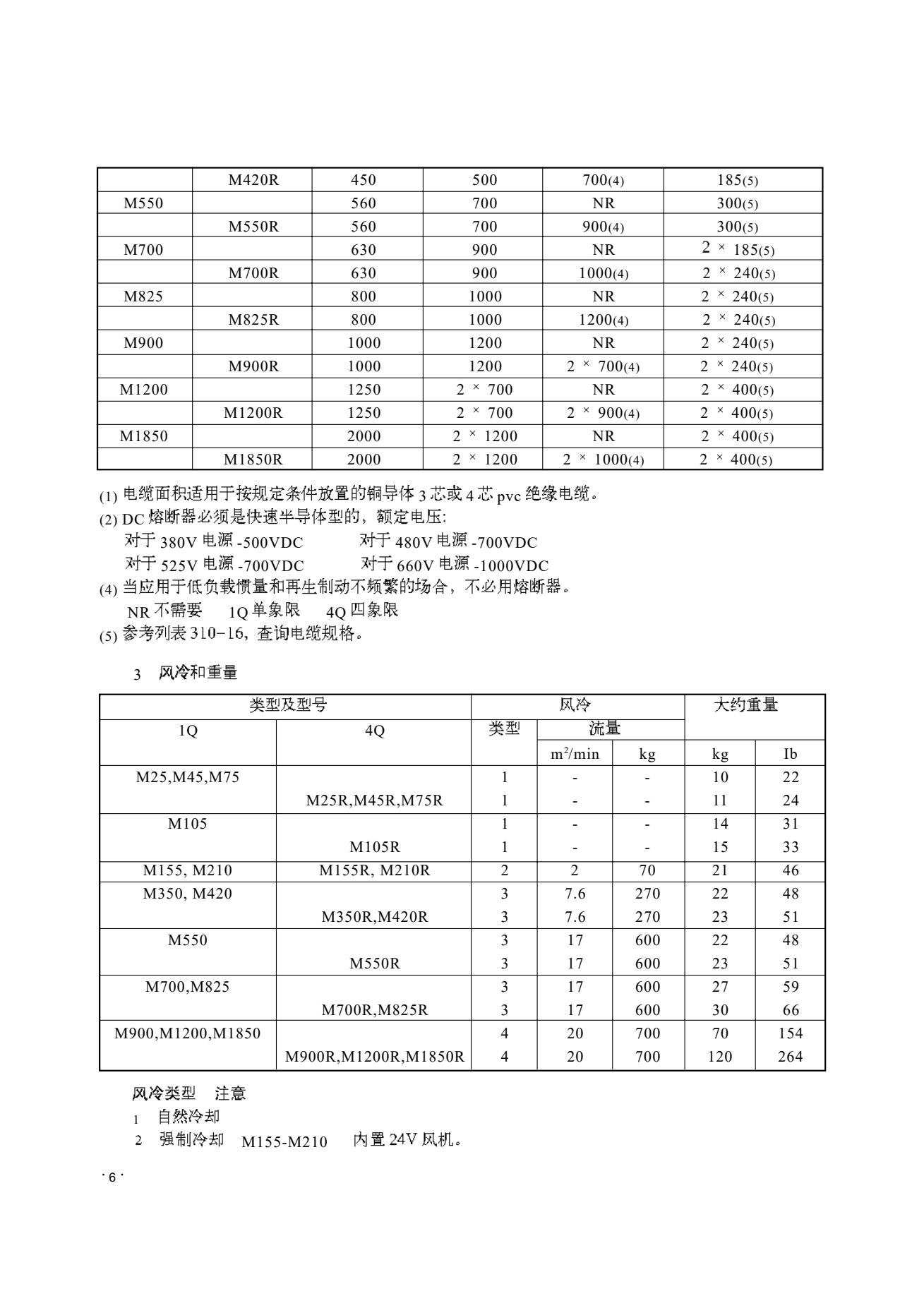
The DC converter is the second inspection pillar. Take the 6000-series power units common in Roland 700-era presses: supply voltage comes in three-phase 400 V, 460 V and 500 V variants, permissible mains tolerance ±10 percent, frequency 47 to 63 Hz, speed range better than 1:100, and the units are open IP00 builds that must live in a ventilated electrical cabinet. Self-ventilated 30 A units are rated for 0 to 45 °C, force-ventilated types from 50 A upward only 0 to 35 °C; above 55 °C ambient the nominal DC current derates 1 percent per degree, and above 1,000 m altitude another 10 percent per 1,000 m. The Mentor-series DC converters fitted to the KBA Rapida 105U span 25 A to 1,850 A and 7.5 to 750 kW with the same ±10 percent voltage tolerance and 45 to 62 Hz frequency window — so always match the cabinet nameplate against the shop’s actual supply.
The parameter menu is the second layer. Older DC converters use tiered security codes: a level-one code unlocks write access to visible parameters, a level-two code opens everything, and the speed-loop P/I/D gains, feedback encoder scaling and bridge 1/2 current limits all sit in the deeper menu. The biggest risk in a used machine is silently retuned parameters. Have a qualified technician record the key values and compare them against factory defaults; any large deviation needs an explanation.
5. The encoder: 0.1 mm concentricity is not superstition
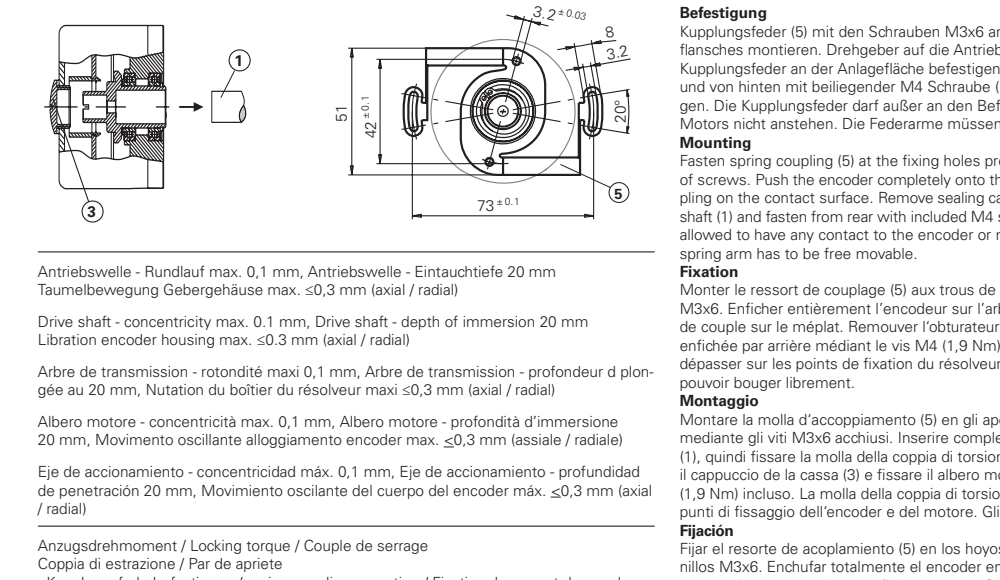
The incremental encoder is the most fragile link in the feedback chain, and its installation spec is unusually concrete: drive-shaft concentricity max 0.1 mm, immersion depth 20 mm, housing runout max 0.3 mm axial and radial, spring-coupling tightening torque about 1.2 Nm. The encoder’s own bearings last roughly 8,000 hours at 3,000 rpm, tolerate 20 N radial and 10 N axial load, and operate from −25 to +85 °C. In practice this means the housing must never be clamped or distorted, every elastic adjusting element keeps clearance to absorb thermal displacement, and the housing is never opened. Speed-loop hunting, low-speed crawl and longitudinal register drift very often trace back to an out-of-tolerance encoder fit or aged encoder bearings.
Common misjudgments and an acceptance checklist
Three mistakes dominate used-press inspections. First, demanding the patina be turned off as if it were burning — that sacrifice is the motor’s remaining life. Second, running the motor unloaded only: current-limit and dual-bridge switching faults never surface without load. Third, ignoring cabinet ventilation: the converter’s rated ambient ceiling is easily exceeded in a hot shop, and a derated converter is a derated press. Put five items on the acceptance sheet: frame size matches the relubrication hardware; grease and commutator cleaning records are continuous; the commutator shows no scorch spots or steps and brush-holder clearance is about 1.5 mm; the converter nameplate voltage and frequency match the supply and its cooling fan runs; the encoder mounting is unclamped and concentric. For related reading see our earlier piece on lubrication-system maintenance criteria, and browse the current equipment listings to shortlist by format and colour units.
Conclusion: the value of a used DC-drive offset press lies not in whether it starts, but in how much margin remains along three lines — lubrication, commutation and feedback. The frame number defines the lubrication design, the grease chart defines remaining bearing life, the 600-hour cleaning cycle reveals maintenance discipline, the speed range and thermal limits define converter health, and 0.1 mm of concentricity defines encoder reliability. Pass all five and the main drive is genuinely ready for another decade of production.