

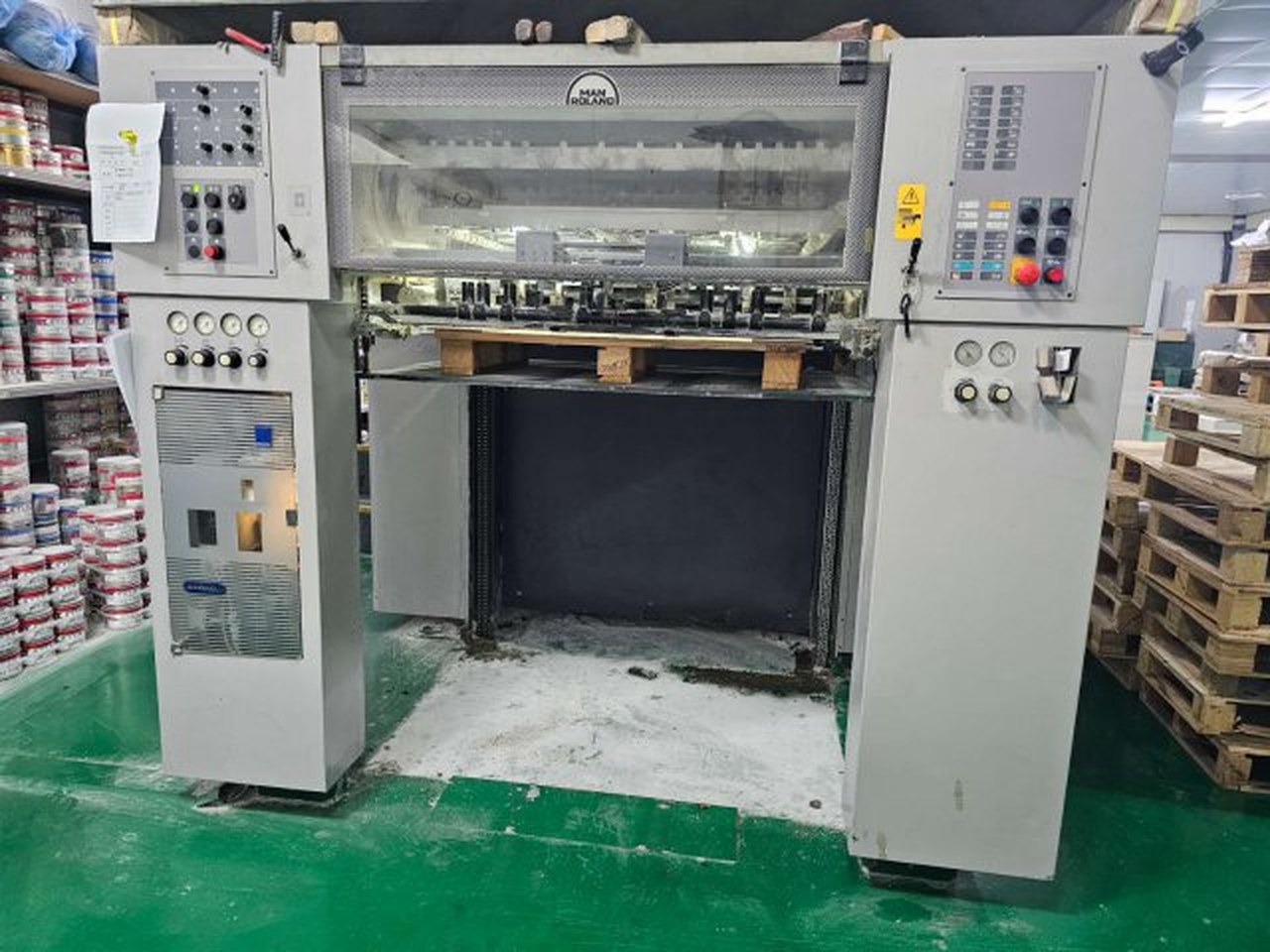
Mid-October brings a concentrated wave of bankruptcy liquidation lots onto judicial auction platforms across China. In Yangzhou, Jiangsu, a bankruptcy batch opens on October 17: a Japanese Ryobi 920ST-4 offset press and a German Heidelberg sheet-fed press each carry a starting price of RMB 100,000, a German Stahl KC66/4 knife-bucket folding machine starts at RMB 9,000, and a Japanese Horizon SB-09 perfect-binding line starts at RMB 90,000, with an automatic laminator, a program-controlled cutter and a digital printing set in the same batch. Earlier, on October 10, a batch of machinery from a Yibin technology company started at RMB 40,000; on October 12, a Songde gravure printing line from a packaging company in Nanyang, Henan, was listed at RMB 175,500, and a Chengdu banknote-printing company opened a disposal tender the same day. Bankruptcy liquidation is becoming a major supply source for used printing equipment in the fourth quarter — and it puts the arithmetic of reserve price versus landed cost in front of every bidder.
- The reserve price has a legal floor: under China's online judicial auction rules, the starting price (reserve) is set by the court against the appraised value and may not fall below 70% of the appraisal or market price; the deposit is usually set between 5% and 20% of the starting price.
- Price cuts after a failed round have a ceiling: if a round fails, the lot must be re-auctioned on the same platform within 30 days, and the next starting price may not drop by more than 20%; arithmetic on the 70% floor gives a theoretical second-round minimum of about 56% of the reference value.
- The October lots span a wide range: from the Ryobi 920ST-4 and Heidelberg presses to Stahl folders and a Horizon binding line, whole plants are split into separate lots with entry thresholds from a few thousand yuan to the low six figures.
- The starting price is not the hammer price, let alone the landed cost: dismantling, craning, transport and taxes are commonly borne by the buyer, and an as-is sale carries no warranty for defects.
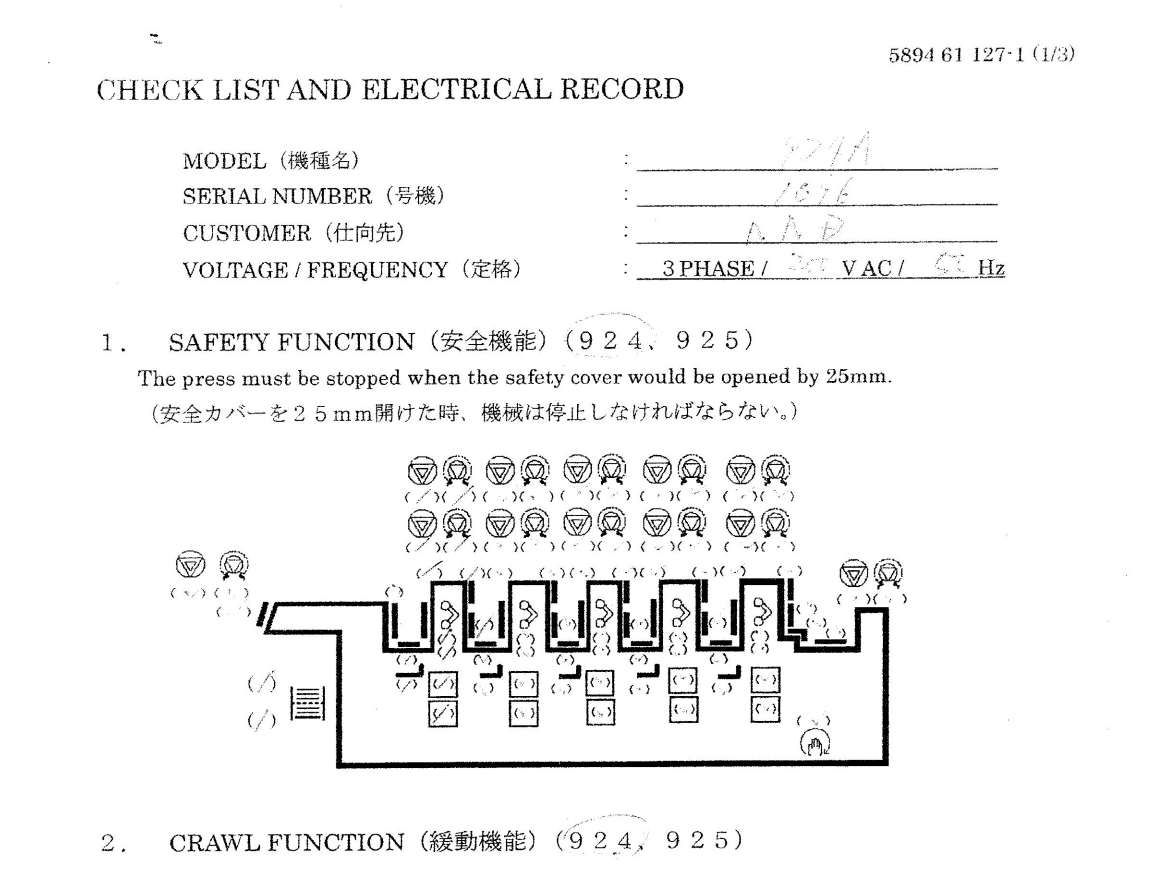
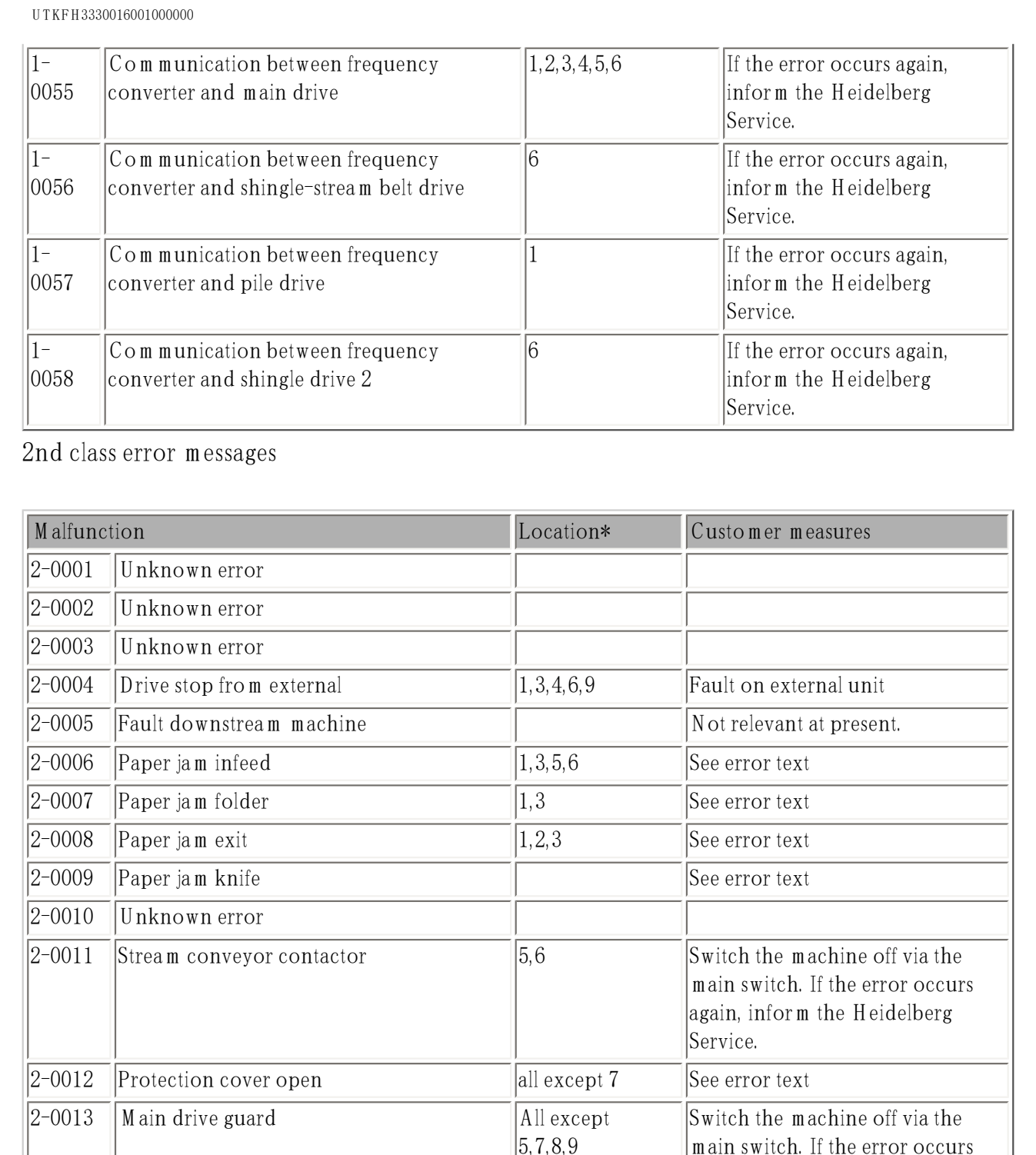
- Documentation availability shapes residual value: whether you can verify the electrical check list, fault code tables and circuit diagrams directly affects repair lead time, spare-part sourcing and acceptance after relocation.
Where bankruptcy equipment comes from — and how it differs from state-asset disposal
Article 112 of the PRC Enterprise Bankruptcy Law requires that bankruptcy property be sold by auction unless the creditors' meeting decides otherwise. In practice, the administrator sells lots on online judicial auction platforms under court supervision, and all proceeds go into the administrator's account for unified distribution. This differs from the state-asset disposals the trade knows well: those run through property-rights exchanges with fuller entry and qualification procedures, while bankruptcy sales are driven by the liquidation timetable and release supply in bursts. In late September, a Heidelberg offset press with a dust collector from a Xinhua printing house in Jiangxi sold for RMB 740,000 through the state-asset channel (see our September state-asset disposal roundup); in the bankruptcy channel, a press of a comparable brand class starts at the RMB 100,000 level. The gap is, in essence, the price of a disposal deadline.
How the starting price is set: a 70% floor and a 20% cut ceiling
The pricing framework is simple. The first-round starting price may not fall below 70% of the appraised or market value; if no one bids, the lot fails and must be re-auctioned on the same platform within 30 days, with the next starting price dropping no more than 20%. Using a court-published example: for property appraised at RMB 2 million, the first round starts at RMB 1.4 million and, if it fails, the second round can drop to RMB 1.12 million. Note that printing presses are specialized assets: appraisers usually value them on a quick-liquidation basis, so the appraisal can drift from market conditions on auction day. Bidders should calibrate the starting price against their own market read rather than treating it as a fixed discount coupon.
Reading the October lots with real parameters
The Ryobi 920 series (models 924 and 925) in the Yangzhou batch represents the mid-small-format multi-color class. The electrical check list that accompanies such machines (document no. 5894 61 127-1) specifies a minimum printing speed of 3,000 sph and a maximum of 16,200 sph, and requires the press to stop when a safety cover is opened by 25 mm — three baseline checks for judging whether the electrics and safety circuits have been altered. The Stahl folder story shows why documentation continuity matters: a 1988 circuit set already detailed the mains connection at 3×346 V, 3×380 V or 3×420 V, 50 Hz, with a maximum fuse of 35 A; by the 2006 fault code table for the KHC78-4KLL, errors were organized into four classes — a class 1 error stops all devices immediately, a class 2 error stops everything except the feeder and lets downstream units run to a sequential stop. Code 1-0055 flags communication loss between the frequency converter and the main drive, 1-0056 through 1-0058 cover the shingle-stream belt, pile and shingle drives, 2-0006, 2-0007 and 2-0008 mark sheet jams at the infeed, the folder and the exit, and 2-0034 signals a wrongly configured main-drive rotation direction. Eighteen years of continuous records is one reason old Stahl folders still find buyers.
Key mid-October lots at a glance
| Date | Location | Lot | Start/list price |
|---|---|---|---|
| Oct 10 | Yibin, Sichuan | Machinery batch of a technology company | RMB 40,000 |
| Oct 12 | Nanyang, Henan | Songde paper gravure printing equipment | RMB 175,500 |
| Oct 12 | Chengdu, Sichuan | Disposal tender of a banknote-printing company | RMB 40,000 |
| Oct 15 | Jinhua, Zhejiang | MHC-1300F automatic flatbed die cutter | RMB 30,000 |
| Oct 15 | Dongguan, Guangdong | GW-1450L high-speed laminating (mounting) machine | RMB 20,000 |
| Oct 17 | Yangzhou, Jiangsu | Ryobi 920ST-4 offset press (bankruptcy asset) | RMB 100,000 |
| Oct 17 | Yangzhou, Jiangsu | Heidelberg offset press (bankruptcy asset) | RMB 100,000 |
| Oct 17 | Yangzhou, Jiangsu | Stahl KC66/4 knife-bucket folding machine (bankruptcy asset) | RMB 9,000 |
| Oct 17 | Yangzhou, Jiangsu | Horizon SB-09 perfect-binding line (bankruptcy asset) | RMB 90,000 |
The list reflects public listings on judicial auction and asset-disposal platforms as of October 8; lot condition, viewing arrangements and bidding terms are governed by each auction notice.
The buyer's risk checklist: converting the reserve price into landed cost
Run six calculations before bidding on bankruptcy equipment: ownership and seizure status (match the court rulings to the nameplates); the appraisal report (condition-rate assumptions and any missing components); tax allocation (some notices pass transfer taxes to the buyer); dismantling and transport (craning, cutting, haulage and insurance are typically at the buyer's cost, as-is); documentation completeness (whether electrical drawings and fault code tables accompany the lot — a missing circuit diagram multiplies troubleshooting time); and post-relocation commissioning (folders need professional realignment of transfer angles and jam-monitoring sensors, and blind start-ups amplify damage). Most bankruptcy auctions arrange static viewing only, and whether power-on trials are allowed is defined by each notice — under static-viewing conditions, file verification and on-site experience carry even more weight.
Common misjudgments and follow-up questions
Three misjudgments dominate. Treating the starting price as the hammer price: popular lots can bid up through several rounds while unwanted ones may fail twice and move to direct sale. Treating an as-is sale as inspection immunity: once the court ruling is issued, defect risks transfer to the buyer immediately. Assuming auctions are always the cheapest channel: for bundled whole-line lots with complex title, the landed cost can exceed a dealer-refurbished machine — compare quotes such as the used offset presses in stock on our platform before bidding. Questions like “can I buy a press at a bankruptcy auction”, “how does title transfer work” and “is a lot without documentation worth it” all point to the same answer: the depth of pre-bid due diligence determines the post-purchase repair bill.
Bottom line: bankruptcy liquidation adds real supply to the used printing equipment market this quarter, and the 70% rule gives buyers a firm price anchor — but the true cost hides in dismantling, taxes, missing documentation and commissioning. Buyers who verify ownership, read the code tables and convert reserve prices into landed costs are the ones who capture the discount.


